Monday, May 16, 2011

Practicalities #4A: The Bus

I'm always saying how I took the bus or the train from here to there, so I thought I'd elaborate on what "the bus" and "the train" mean.

When you want to leave Tisovec, you must first figure out how you're going to go. This involves going to http://www.cp.sk/, where you fill in when and from where you're leaving and where you want to go, and it tells you what buses, trains, or combination thereof you can take. (If you're leaving Slovakia, you usually also check a private company like Eurolines.) Then—and this is VERY IMPORTANT—you write down not only the times that you want, but all of the other times in the general vicinity of the ones you want. This is so that when you miss a bus or one just doesn't show, you have a backup plan. You also write down the route the bus is taking and where you have to make connections. I usually have pieces of paper in my bag that say things like

6:08-8:39 Z
9:10-9:50 pl 3
(bus leaving Tisovec at 6:08 and arriving at Zvolen in 8:39, then subsequent bus leaving Zvolen from platform 3 at 9:10 and arriving in Banská Štiavnica at 9:50)

or

13:35-15:05 BB
15:50-16:40 B pl 21
16:49-17:54 t
(bus to Banská Bystrica, bus from platform 21 there to Brezno, train from Brezno to Tisovec).

If you don't have these things, then you must have a cell phone and a friend with an internet connection to check cp.sk for you, or a place to stay the night, or all of the above. This is the Voice of Experience talking.

The main bus stop in Tisovec is in front of the church, but there's one to the north on the way to Brezno and two to the south on the way to Hnúšťa. Here's the catch (one of many): it has to be a local intercity bus to stop at one of those stops, or you have to be able to explain in Slovak where you want to get off and hope that the driver is obliging.

Speaking of obliging, sometimes the bus will stop and instead of actually getting on, someone will talk to the driver and give him a bag or a box and then get off. Then at another stop someone will collect the parcel from the driver. I seem to remember once the thing that was being delivered was eggs.

On long trips there's often a stop, usually in a town. These stops, which are not marked on the schedule, can range from 10 to 45 minutes. Big bus stations like Bystrica, which is probably the most frequent stopping-point, have restrooms and food stands, with "burgers" and langoš (Slovak frybread; sources report that the best langoš is at the Bratislava bus station). If it's a long break, the driver may kick people off the coach.

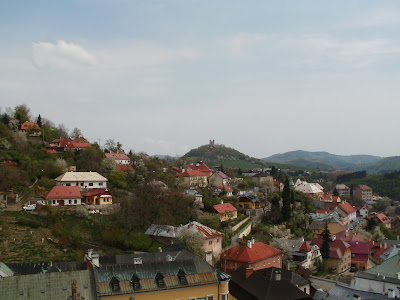
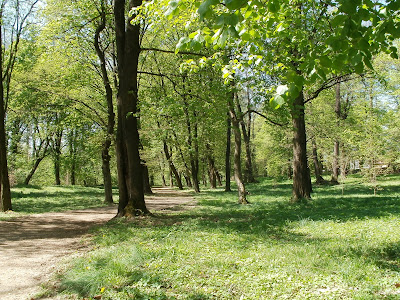
The long-haul buses, like those going from Košice to Bratislava, for example, are usually nice big coaches, Volvos or Scanias or the like. The two pictures above are the Scania coach we took to Hungary. The shorter-range buses can be nice, but they can also be pretty cruddy. Both the very first picture and the one below are shorter-range buses. It's really a crapshoot what kind of bus is going to show up.
It seems like the drivers own their own buses, because some of them have done a lot of interior personalization in the front windows. There's often Slovakia memorabilia, sometimes garlands of fake flowers, saints or crucifixes, and small stuffed animals (keep in mind the great majority of drivers are men). The best decoration was probably one on a bus that Bear often rode last year: a tiny novelty t-shirt that said "Sexy Boy."

The worst things about the bus are that it's easy to feel motion sick, especially going to Brezno or Muráň, and there's often not much legroom, and sometimes you get the smelly drunk dude sitting next to you, and on occasion the bus you're waiting for just doesn't show up, and every once in a while it's really crowded and you have to stand up for a bit. The good things are that the buses are pretty frequent, especially between Tisovec and Brezno, so there's always a good chance of getting home as long as you can at least get to Brezno, and they're mostly cheap, and pretty safe, even if the driver seems a little reckless. Riding the bus: all part of the adventure.

Sunday, May 15, 2011

Hell Maturita Week

This is the beginning of a very important week. It’s maturita time.

...There should have been more of a clamor after that dramatic statement. You don’t know what the maturita is? That’s likely because it’s very much a European rite of passage, especially here in Central and Eastern Europe.

The maturitas (maturity, if you want the proper plural) are end-of-school leaving exams. All Slovak students must take the Slovak exam, and of course at bilingual schools the students must take a foreign language exam as well, so our students all take the English maturita. After that students may choose a few subjects and they take intensive seminars on these throughout their final year to prepare them for the maturita. These subjects include geography, biology, and their second foreign language, among others. At EGT the kids take the Slovak maturita in their fourth year, and all others their fifth year. For some of the tests, including Slovak, English, and history, there is a separate written component completed earlier in the spring. The main event is the oral exam.

I can only speak about the subjects that I’ve been involved in, which are English and history, but this is the basic form. There are 30 possible tasks, and each task has three parts. The first student comes in and chooses a number from cards face-down on the table. Then he or she gets about 30 minutes to prepare. Students may write notes for themselves during this time, and some questions have specific aids, like articles, maps, or pictures. At the end of the 30 minutes the student must talk about the three questions in front of a panel of three proctors. As one student begins talking, another is preparing. The proctors ask questions to help the students. The students talk for 20 to 30 minutes or until they’ve entirely exhausted their abilities.

There are very particular rules about the proctors. Each panel must have an outside proctor who is not an EGT teacher, and for the bilingual subjects one proctor must be a native English speaker or equivalent. Obviously, the proctors are supposed to be qualified and know the answers for all the 90 possible tasks.

Scoring, like all grades, is on a scale of 1 to 5. Opposite to the Advanced Placement exams in the US, a 1 is the best score and a 5 is the worst. Each question is scored, then the proctors decide what the student’s overall score should be. Then there’s a complicated formula that’s like (a certain number of points X the score from task 1) + (another number of points X score from task 2) + (some more points X score from task 3) / 10 or 3 or something, I don’t even know, obviously I’m not in charge of anything involving math because this is serious business. About five students do their tests, then the proctors discuss, then the students come back in and the head of the panel asks if it’s alright to read all their scores aloud (no one ever says no). Then she reads their scores and all the proctors shake the kids’ hands. As you can imagine, this can be rather awkward if a kid doesn’t pass. I’m never really sure what to say, anyway.

Two years ago I was on the history panel. I learned a lot from it, because each task has at least one question about Slovak/Czechoslovak history, and though the students answer this question in Slovak, the headmistress made them summarize what they’d said in English for me. When I first got the packet of questions I felt a little like the students must feel: overwhelmed at everything they need to know. I originally had an example of a task posted, but I've decided to take it down, because the tasks sometimes don't change that much year to year and I don't want to risk doing the wrong thing.

History is a good panel to be on because usually only 20 to 30 kids take it, so it’s usually only one day. English, on the other hand, is four days this year and was five days in the past two years. Usually they try to divide the proctoring between two American teachers, but this year I am the duty native speaker, so I’ll be here all week, folks. This is because I was the only one who taught the fifth years their British and American history review course, and the English maturita for some strange reason includes a question about history/geography/social studies of English-speaking countries. So I’m the only one who knows the answers to all the history questions. The English tasks also include one conversation topic and one (British/American) literature question. The conversation topics cover everything from stereotypes of different nationalities to sport to whether it’s better to live in a village or a city.

While some people say that the maturita really has no bearing on students’ futures, it’s nonetheless an important part of their schooling and culture. And for about 11 hours a day for the next four days, it’s going to be an important part of my life, too.

Saturday, May 14, 2011

Class Trip

In my time living here I have come to internalize a bit of the rivalry between Slovakia and Hungary. I think Slovakia is better than Hungary in almost every way (except at having Cherry Coke and Dr. Pepper). I’m especially perturbed by the Hungarian language and its complete linguistic isolation from any neighboring language. And even though Slovakia lost in the hockey, at least this time they didn’t lose to Hungary.

All that said, it’s a little hard for me to get into the message behind our class trip to Hungary: that we should be proud of Hungarian history because it is our Slovak history as well. For about 900 years present-day Slovakia was part of Hungary, first in the kingdom of Veľká Morava and later in the Austro-Hungarian Empire. Most of any current antipathy between the two countries originates in the post-World War I era, when Hungary lost about two-thirds of its land under the Treaty of Trianon.

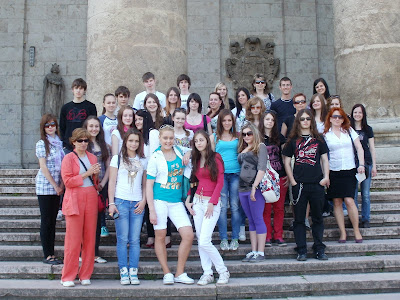
We—almost 30 third years, three history teachers, the financial secretary, and the secretary and her family, including her brother, who drove the coach—left Tisovec just after 7 on Wednesday morning and headed south and then west. On the way students gave short presentations (in English) on the history of the Hungarian kingdom. I took notes like a good student myself. We actually crossed into Hungary twice—we went in, then back into Slovakia, then back into Hungary again. I must admit I’m not sure why we did this, but it was a good illustration of how open the borders are.

Just across the Dunaj/Duna/Danube from Štúrovo (known as Párkány during the Hungarian years) is Esztergom, or Ostrihom if you’re Slovak. The basilica there is the third largest in the world. It was completed in 1856. I thought the most interesting part was the crypt, with brick arches and epic statues of Eternal Life and Eternal Perdition. It was also here that I discovered that the kids were going to take more pictures of themselves than of anything historical.

The next stop was Visegrád. There are two castles there: the reconstructed royal palace (királyi palota) near the riverbank and the citadel (fellegvár) up on a hill. The citadel is older, and the palace dates from the time of one of the greatest Hungarian kings, Matthias Corvinus. Matthias’ wife, Beatrix, was Italian and brought the Renaissance to Hungary. The royal palace has a Renaissance courtyard with the “Hercules Fountain” depicting baby Hercules strangling some snakes. The original, fragments of which are preserved inside the palace, was made of red marble, and ran with wine during banquets. The citadel of course has lovely views of the river and also wax-work dioramas of scenes of castle life that the headmistress and I agreed were full of silly inaccuracies (like lemons and oranges as garnish/decoration). The really great part was leaving the palace and getting on the coach to go up the hill to the citadel. In my non-teacher life I would’ve had to walk, and I’m grateful I didn’t have to do that with my kids.
We got a bit behind schedule somehow and arrived in the town of Szentendre around 5:30. Originally the kids were supposed to have free time and get dinner there, but we went straight to the restaurant. After we ordered I went back to the ATM we’d passed to get some forints. The ATM was only one turn away and should’ve taken about a minute and a half, tops, to get to. Even before my first lap around the block I was already thinking, “Oh, Ahab, you know better than to wander around a foreign town by yourself,* especially in your current fatigue-addled state of mind.” I managed not to get irreparably lost, though, and made it back to eat my beef stew. It was so good.

Our hostel was on the outskirts of Buda. It was a quick trip from there to the castle hill on Thursday morning. We walked around the president’s palace, Matthias Church, and the Fisherman’s Bastion. I was called upon to review the characteristics of Gothic architecture outside the church; I was hoping we’d go in, but we didn’t, alas for me. From there the bus took us to Pest and we went to the House of Terror. I think that it seemed even worse to me this time since I’ve been teaching 20th century history. Some of the kids were upset by the museum, as they should have been, so at the end of the visit the headmistress and I tried to explain why we visit museums like that, and concentration camps—lest we forget. As we left one of the girls told me that it was the first time she’d realized how bad things got during the socialist era (Hungary tried to rebel against the Soviets in 1956 and the attempt was answered with great cruelty). She said, “I thought after World War II it was better.” I told her I’d thought so, too, before I became a history teacher.

After all that, the headmistress let the kids exercise their democratic rights, and they voted not to visit the art museum. We had a brief stop at Heroes’ Square (Hősök tere, left) and then took the metro to some other square whose name is frankly unimportant. Then we all got two hours of free time.

Last time we visited Budapest we didn’t get to go in the big market hall when all the stalls were open, so I headed there. I will miss European markets when I leave. Most of the greengrocers had strawberries out, and when I walked by the first stall and smelled them I had to have some. I consulted my phrasebook and found a vendor who was not busy and looked pleasant. Standing in front of the strawberries I smiled and said hopefully, “Fél kilo?” It worked like a champ. I paid about 500 ft. for my half-kilo, rinsed them at a little sink, took them outside, and ate about half of them straightaway.

Then I succeeding in locating both Cherry Coke and Dr. Pepper, and of course got a milkshake from Mickey D’s.

When we reconvened (the kids had almost all gone to McDonald’s, too, and shopping), we took the metro back to Hősök tere and the bus met us there. You have not seen a bunch of kids more eager to go home from a pleasant two-day trip than these ones. Admittedly it was noticeably warmer in Budapest than in Tisovec (a thermometer as we were leaving said it was 32°), but when one of the girls described the weather as “tropical,” I LOL’d.

My biggest concern during the trip was whether or not these kids were actually making any connections between what we were seeing and what they’d learned in class. I’m certain a few of them were willfully ignoring any possible educational tidbit—I do teach them, after all, I know what they’re like—but I think most of them got something. And though one girl got a little sick, no one got drunk or arrested or woke me up in the middle of the night, and that’s really all I could have asked for. It was fun to laugh at them and the silly things they did and said, too; two of the girls were giggling about something as we walked to Hősök tere and I asked what they were doing. Miška said, "Majka fell in love with the construction worker" we'd just passed. Majka defended herself with "He has beautiful eyes!" and looked for him very unstealthily the next two times we passed by the same place. Teenagers.

In the end, no matter how much I complain about not understanding Slovak and Slovakia, there is no mistaking the sense of relief I feel when I get back from having left the country.


*Clearly I do not truly know better.

Saturday, May 7, 2011

Trenčín

Slovakia, as we have no doubt previously discussed, is not a big country. It is about twice the size of Wales, or four times the size of Jamaica, or, like, a twentieth the size of Canada (thank you, Across Cultures). It should take about 10 hours to drive clear across the country east-west, or about five north-south. But as I didn't have the foresight two years ago to buy a used car and learn to drive stick, I still have to rely on public transportation, and so it took Robin and me six hours and three buses to get to Trenčín on Friday afternoon.
We liked the city immediately. The center is a short walk from the bus and train stations, passing the rock outcrop the castle's built on. Trenčín has many lodging options, but we stayed in the Hotel Grand. It is by far the swankiest place I've stayed in Slovakia. Accordingly it was a bit spendy. I regret nothing.

A stage with a big screen and a sound system were set up in Mierové namestie, the main square, and a crowd had gathered to watch Slovakia play (and, unfortunately, lose to) the Czech Republic in the hockey championships. We watched most of the game in a restaurant called Mexiko. Their interpretation of enchiladas was pretty wide of the mark, but the mojitos were good.

On Saturday morning we got to see the town without a lot of people around before heading up to the castle. There's a covered stairway that goes partway up the hill and leads to Marianské namestie, a little square consisting of a church and a smaller chapel. There was a mass in progress, but even if the church had been open, it was too full of scaffolding to see anything interesting.

At the castle gate we bought our tickets for the tour starting at 9:45. (The photo fee was a very reasonable .70€.) Tours start at the gate to an inner courtyard, so we looked around some before and saw a baby trebuchet and a new phenomenon, castle goats. At the outset our guide told us she didn't speak much English and then proceeded to give us the most salient points in perfectly serviceable English.

Trenčín's recorded history dates back to the Roman Empire, when Roman soldiers defeated a local Germanic tribe and then wrote about it on the cliff that the castle would later occupy.* The oldest part of the castle is a rotunda built in the 9th or 10th century of which now only ruins remain. Much of the castle was destroyed by fire in the late 18th century and thus there's been a lot of reconstruction, but whatever. I'm giving this one a pass. The most famous master of the castle was Matúš Čak (Csak in Hungarian), who held the cool title "Lord of the Váh and the Tatras." The tallest tower is named for Matúš and dates from the 14th century.
Tower-climbing story of the day: This one is unique because there isn't one continuous staircase all the way up. You go up a floor, walk through a room to a different corner, and take a different staircase. They're all pretty narrow and have very short doorways. Only the last one is a spiral, too.

Our tour over, we went back down to the lower area and saw that there was a mini historical reenactment camp set up, including an old-school wooden merry-go-round. Then Rob spotted a guy shooting arrows, and asked him if she could try. It was a euro for four arrows and we both had a go. I SHOT ARROWS IN A CASTLE. Just clarifying that for the record. For another euro, the blacksmith at the forge let visitors strike their own commemorative coins by whacking a simple die with a hammer. Trenčianský hrad wins for activities.

Then, as so many of these stories go, we ate some ice cream and departed the town.

Trenčín is a good place. You don't really need to be there more than a day; it would be a good excursion from Bratislava.

The next post will be about a special mid-week adventure happening this Wednesday and Thursday. For the sake of my third-year history class, I'm going back...to Hungary.

*Guidebooks will tell you the inscription can be seen through a window at the back of the Hotel Tatra, which is built right up against the cliff. Said hotel is currently under massive interior reconstruction and is closed for a bit, so don't plan on being able to see the writing anytime soon. There's a replica on display at the castle.

Friday, April 29, 2011

Slovensko Do Toho

Forget the royal wedding; Slovakia's got other things on its mind today, the beginning of the 2011 International Ice Hockey Federation World Championships. This would be a big deal in any hockey-crazy country, but it's an even bigger deal here because this year Slovakia's the host. From now until May 15, games will be played in Bratislava and Košice, with 16 teams competing. Fan gear is all over the place here, and lots of businesses are using hockey in their advertising. 

I personally am concerned about the fact that the Stanley Cup finals started in the middle of April and could go on until June. This means that some players may have to decide between playing for their job and playing for their country, and that's an unfortunate choice to have to make. It also means that I'm pretty sure the US isn't going to win very many games here. 

Wednesday, April 27, 2011

Banská Štiavnica

Before we returned to school today I managed to squeeze in one more day trip. Tuesday was a working day, though not a school day, so the buses were running normally, and I found that it was easier to get to Banská Štiavnica on a weekday than on a weekend.

Banská Štiavnica is a former mining town. Back in the olden days, there was gold in them thar hills, and silver, too. The town became the site of a mining academy, and one of the most prosperous areas in Slovakia. It has not one but two castles, many churches, and a lot of handsome buildings.

If you're planning on visiting Banská Štiavnica, the first thing you need to know is that it's in a hilly area, so there's lots of going up. The second is that if you're going by bus, you should get off at the Križovatka stop, which is the one right in front of the Billa. Then, facing Billa, turn left and walk up the street until it becomes Dolna, which takes you right up to the historic center. Ahab: Getting off at the wrong bus stop so you don't have to.

I was in the town for a good four hours, but I don't feel like I did four hours worth of anything. What I did do was visit one of the many museums, the Kammerhof, which had exhibits about mining and the life of the miners. It made me realize that mining would be a horrible job for me personally, and that it couldn't have been fun for anyone. Of the objects on display I especially liked the models of mines built in bottles.

As previously mentioned, the town has two castles, although in Slovak these are zámky, not hrady. The newer, Nový Zámok, has an exhibit on the defence of the town from the Turks, and I walked up the hill to see the castle itself, but didn't go in. Instead I visited Starý Zámok. When I first was reading the various sites' opening hours, one listed the Old Castle as being closed on Mondays AND Tuesdays in April, and for a while I was pretty miffed about it. There was a small door open at the castle itself, though, and there were listed special Easter hours, saying that it was indeed open. Huzzah!

As in Kremnica, this Old Castle is a walled enclosure around a central building. I liked the one in Banská Štiavnica better than Kremnica, for a few reasons. One: there were no workers digging things up and looking somewhat reproachful at visitors. Two: the Old Castle is smaller and cozier. Three: there's a walkway around the inside of the wall. Four: I saw a squirrel there. It used the stairs and ran up and down the walkway and then sat on the roof and ate a nut.

In the towers on the wall there are different displays. One, called Himmelreich, was the prison tower, and still has old manacles and plank beds with iron restraints. Another has various pieces of decorative ironwork, and another has keys and locks and tools all made of iron. I liked going in the bell tower the best. It had big doors that opened up with views of the town (as below), and descriptions of the three bells, the oldest of which is from the 16th century.
I'm not entirely sure what the building in the middle of the complex originally was. In its courtyard and the rooms off it there are displayed a number of sculptures and monumental carvings. On the second and third floors there appear to be offices or something. On one corner there is the most pointless spiral staircase, as it literally just leads into a wooden roof. The cool thing about it is that instead of a plain, solid circular central post, the staircase has a three-part, open Gothic column.

There are lots of things I didn't get to do in town. There are two different parts of old mines that you can tour, other museums and galleries, and a very famous Calvary on the hill opposite the Old Castle. As I got ready to leave, I felt like I hadn't gotten everything I could have out of Banská Štiavnica. Maybe if I had had more time, or gone earlier, or had been with someone who could communicate more clearly than I can? I'm not sure. While it is certainly a nice place to visit, and probably worthy of its UNESCO listing, I was merely whelmed by the town. I did have some delicious mandarinky zmrzlina on the way to the bus stop, though.

Friday, April 22, 2011

A Brief Tour of Lučenec

When you come into Lučenec from the east, the first thing you see is a ginormous silver double cross.

At the bus station, you'll find very nice, new facilities. The bathrooms are especially noteworthy. You don't have to pay to use them, and they have Dyson Airblade hand dryers.

In the historic center, there's this church

and this one,

and this knight who's half wood and half metal. The descriptions are in Slovak and Latin, so I should understand what it's all about between the two languages, but I don't. Something about defending the town in 1551.

Then you walk down the street to find the old synagogue.

Finally you go to the town park, which is rather big and really quite nice. 

Then you go home and cross another one off your list.